
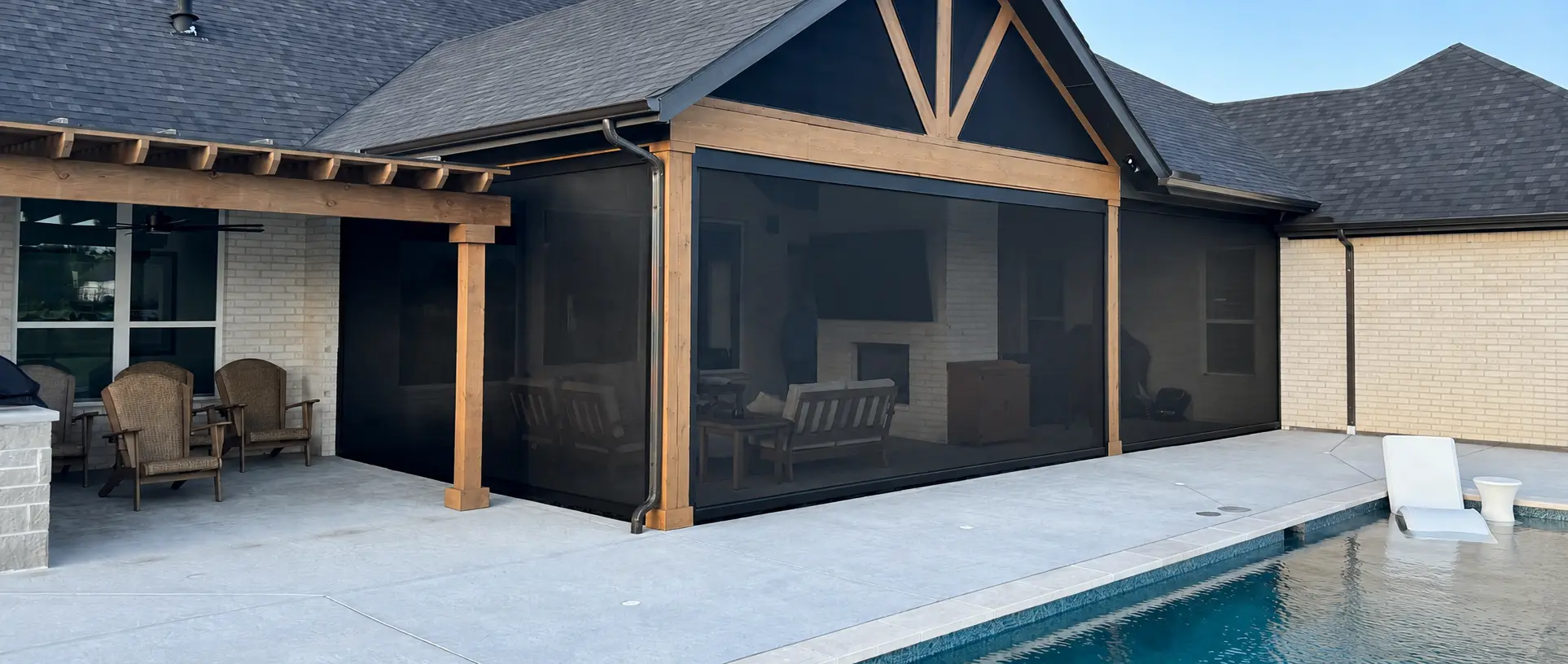
A patio may look finished long before it works the way its owners hoped. Afternoon sun can reach the dining table. Insects can interrupt an evening outside. Or a family may want more separation without losing the option to open the patio again.
A remodel or home sale is a useful moment to review those needs. It is not a reason to rush into the most elaborate system. A clear brief helps everyone compare the right options and understand what is—and is not—being proposed.
1. Describe the patio you want to use
Write down the main frustration in one sentence. “The west-facing opening gets uncomfortable in the afternoon” is more useful than “We need something outside.” Add when you use the patio and what you want to keep: the view, airflow, easy access or the open-air feeling.
- Sun or glare: note when and where it enters the patio.
- Insects: explain which openings and activities are affected.
- Privacy: describe the sightline and lighting conditions rather than assuming one material will provide privacy at every hour.
- More separation: explain what you want to separate from the patio and how often you want it open.
These goals can point to different products. Material openness, color, exposure and the installation all affect the result.
2. Do not treat a screen and a lift wall as the same product
Motorized patio screens use flexible mesh or shade material. They can help with shade, glare or insects, depending on the selected material, while allowing different degrees of airflow and view-through.
STAX patio lift walls use clear rigid acrylic panels that stack above or below an opening. They are a different approach for a project seeking clear panels and added separation, with the ability to open the patio again.
Neither description is a promise of storm protection, a sealed indoor room or a heated space. The specific configuration, exposure, operating limits and intended use need review. Choose around the problem—not just a photo of a product.
3. Give the builder or remodeler the whole picture
If the patio is changing, share both the current photos and the proposed layout. Tell the project team which decisions are still open and which finishes are already complete. Doors, columns, trim, access and available power are planning questions to discuss together; this guide is not an installation specification.
Ask who will coordinate the patio system with the rest of the work, who approves selections and what information is needed before a final proposal. Rough measurements help start the discussion. Final field dimensions, mounting conditions, electrical scope and product compatibility must be verified before ordering.
A useful decision record is simple: the goal, the preferred product category, the unresolved questions, the person making the decision and the next step. Avoid treating an early concept as an approved installation plan.
4. Match the next step to your role
For the homeowner: start with everyday use
Describe the space on an ordinary afternoon or evening, not just on the day it is photographed. Let us know whether you are planning a larger renovation or considering a stand-alone patio improvement. That helps keep the recommendation connected to how you actually live outside.
For the builder: resolve the questions before the finish line
Include the owner and the relevant project team in the same review. Ask for a written scope that distinguishes the patio system from related work and identifies the selections still to be confirmed. We would rather discuss a constraint early than let an assumption travel through the project.
For the real estate agent: distinguish existing condition from an upgrade idea
First decide whether you are helping an owner understand an existing system or exploring a new improvement. A buyer may have different priorities from a seller. Do not present a proposed system, an early estimate or an unconfirmed schedule as completed work.
A patio upgrade does not guarantee a higher selling price or recovery of its cost. If an existing motorized screen needs attention, start with a screen-repair review rather than assuming replacement is the only option. Service availability depends on the system and scope.
5. For a restaurant patio, add the operating brief
A commercial patio has more people using it in more ways. Include the operator in the conversation and show the normal arrangement of tables, doors and circulation. Explain when the space is busiest, which openings need attention and how the team wants the patio to open and close during service.
The project gallery includes a real commercial STAX installation, but one restaurant's configuration is not a specification for another. A patio system does not automatically make an outdoor area an indoor dining room or establish additional usable seating. Intended use and project-specific requirements need their own review.
6. Send a short brief, not a perfect drawing
For a useful first review, send:
- One clear photo showing the full opening, its top and both sides.
- Your city or ZIP code and the number of openings.
- Rough width first, then height, with the units stated.
- The main problem: sun, insects, privacy, the view or added separation.
- Whether the patio already exists or is part of a remodel, plus your hoped-for timing and who is making the decision.
Share only information relevant to the project; a patio review does not need private property, identity or financial documents. If dimensions or the product choice are uncertain, say so. We can discuss what needs confirming.
The online planning estimator is another starting point for supported rectangular motorized screens. It is not a STAX quotation, a product order or a final installed price. Unusual shapes, unsupported sizes and final scope require office review.
7. Know what still needs confirming
Opening size, quantity, material, controls and site conditions affect the project. An older quote may also need review when the scope or selections change. A preliminary estimate should not become a substitute for the final written proposal.
Before ordering, make sure the agreed product, final dimensions, installation scope, related work, price, timing and applicable written warranty are clear. The care, maintenance and warranty guidance explains why the product-specific documents matter.
The aim is not to make the process complicated. It is to make the next decision useful—so the patio you are planning is connected to the way someone will actually use it.